Researcher from Türkiye Progresses to CBT-Hear Certified Practitioner Training
CBT-Hear is pleased to support the professional development of international clinicians and researchers working to improve evidence-based care for tinnitus, hyperacusis, and misophonia.
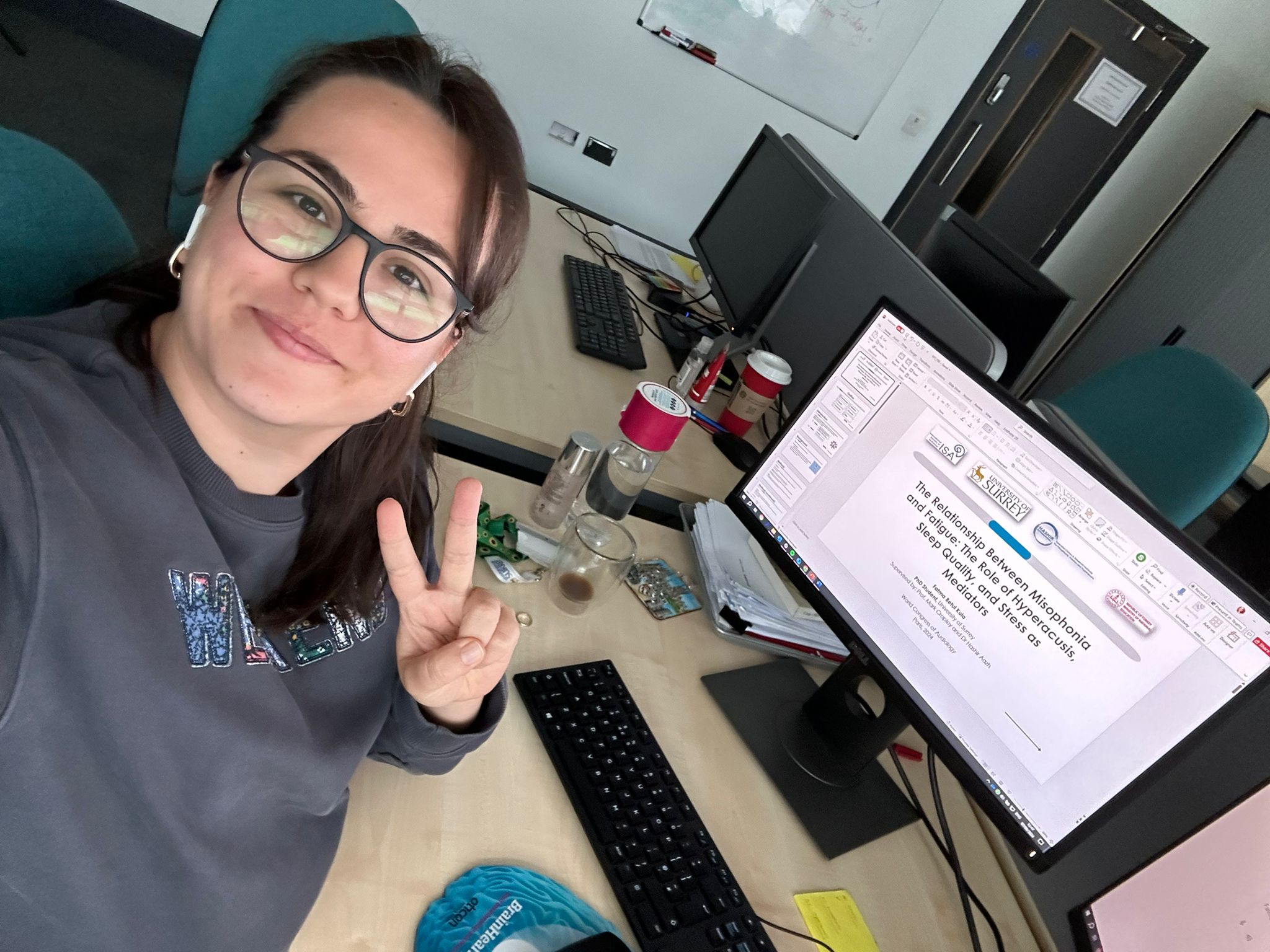
Fatma Betül Kula, an audiologist, researcher, and postdoctoral fellow at Hashir International Institute, has successfully completed the Tinnitus and Hyperacusis Therapy Masterclass and is now undertaking the CBT-Hear Certified Practitioner pathway (Stage 2).
Originally from Türkiye, Fatma combines clinical audiology practice with research in health psychology and psychometrics. She currently works clinically within Ashford and St Peter’s Hospitals NHS Foundation Trust in the United Kingdom while contributing to international research focused on sound intolerance disorders and diagnostic assessment tools.
Her academic work has focused particularly on improving the assessment and measurement of tinnitus, hyperacusis, and misophonia. This area of research is increasingly important as clinicians and researchers seek more reliable and valid methods for identifying symptom severity, monitoring treatment outcomes, and improving consistency across clinical services and research studies.
Among her recent publications is a 2025 study published in PLoS One examining the psychometric properties of the Misophonia Impact Questionnaire (MIQ), Tinnitus Impact Questionnaire (TIQ), and Hyperacusis Impact Questionnaire (HIQ). The study demonstrated strong reliability, internal consistency, and factor structure for these instruments within a non-clinical population. The research also established minimum detectable change values, helping clinicians interpret whether changes in scores over time represent meaningful clinical improvement. This work contributes to the growing movement toward evidence-based outcome measurement in tinnitus and sound sensitivity care.
Fatma has also contributed to the validation of the English version of the MisoQuest questionnaire, published in the International Journal of Audiology in 2025. This study evaluated the reliability and validity of one of the emerging tools for assessing misophonia symptoms within English-speaking populations. The findings supported the questionnaire’s usefulness while also highlighting important relationships between misophonia, hyperacusis, and broader psychological factors.
In another recent publication in Brain Sciences, Fatma co-authored research evaluating the Sound Sensitivity Symptoms Questionnaire Version 2.0 (SSSQ2), a brief screening tool designed to assess multiple forms of sound sensitivity including loudness hyperacusis, pain hyperacusis, fear hyperacusis, misophonia, and noise sensitivity. The study demonstrated that the questionnaire could function both as a general severity measure and as a practical clinical screening checklist.
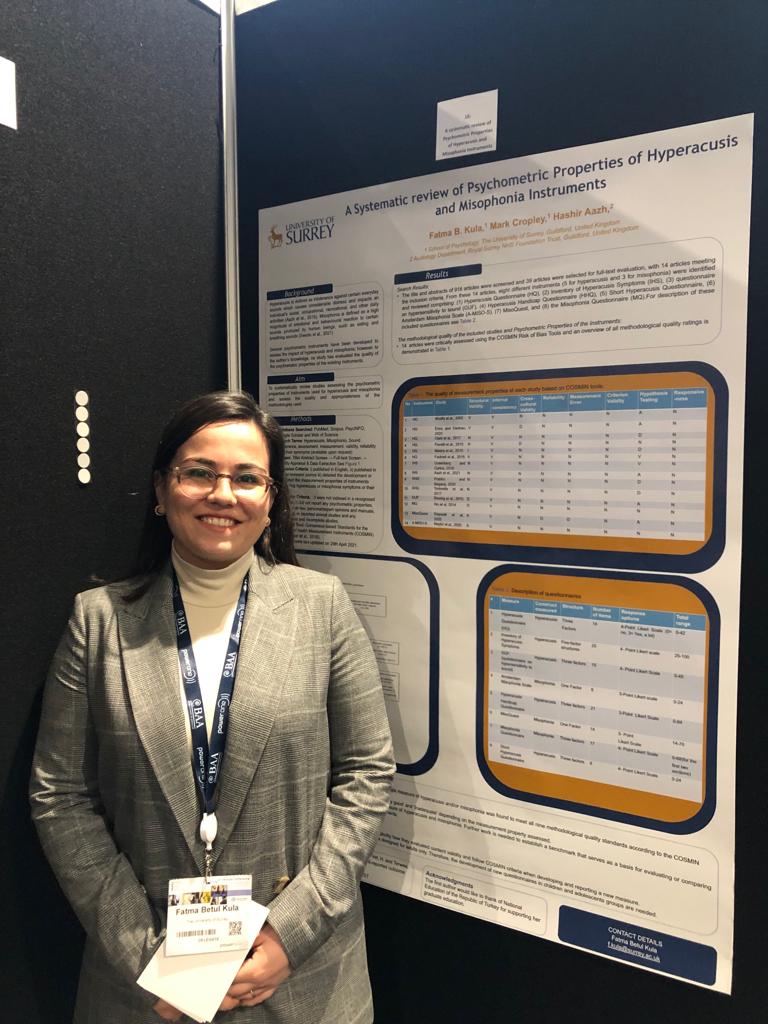
Her earlier systematic review, published in the Journal of the American Academy of Audiology, examined the psychometric quality of existing hyperacusis and misophonia questionnaires using COSMIN standards. The review highlighted important methodological limitations within the field and emphasised the need for stronger diagnostic and assessment procedures. This work has helped inform ongoing efforts to improve clinical assessment frameworks for sound intolerance disorders.
CBT-Hear is particularly pleased to see experienced clinicians and international researchers engaging with advanced clinical training pathways that integrate audiology, psychology, and patient-centred care.
CBT-Hear International is an advanced clinical training and professional development programme designed to improve access to evidence-based care for tinnitus, hyperacusis, and misophonia. The programme supports audiologists, psychologists, counsellors, and other qualified healthcare professionals in integrating cognitive behavioural therapy (CBT) with audiological expertise, hearing science, and compassionate clinical practice.
The continued involvement of clinician-researchers such as Fatma reflects the growing international interest in multidisciplinary approaches to tinnitus and sound intolerance care, bridging research, clinical assessment, and therapeutic intervention.
We congratulate Fatma on her achievements so far and look forward to supporting her continued development within the CBT-Hear programme.